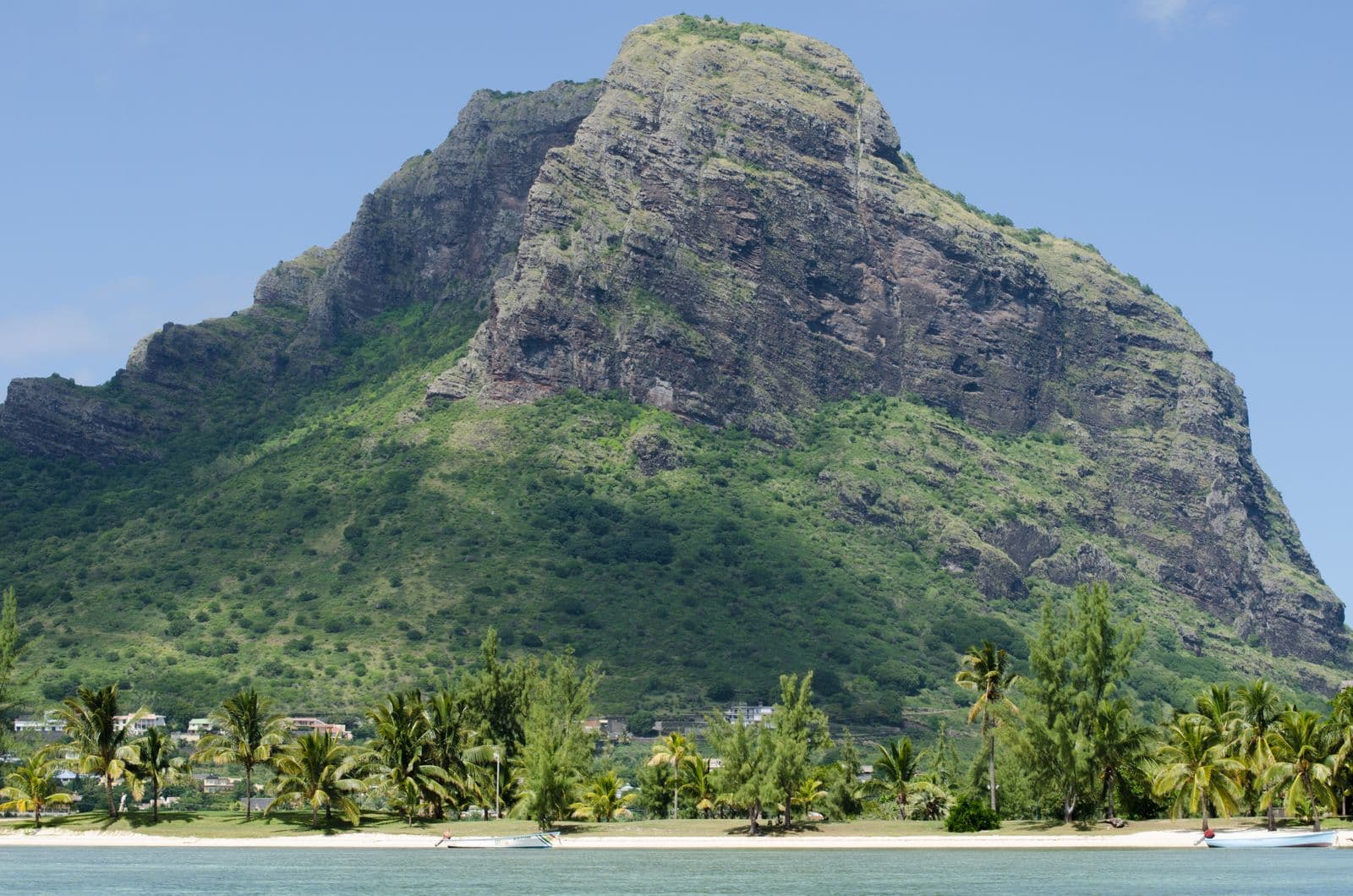
Why Le Morne Is A World Kite Spot
The peninsula catches the southeast trade winds cleanly and offers two very different playgrounds within a few hundred meters of each other: a flat, shallow lagoon inside the reef, and open-ocean waves breaking on the reef itself. Very few spots combine both with this much consistency.
The setting does the rest. You ride beneath a UNESCO-listed mountain, over sand and seagrass in water that stays warm all year.
The Kite Lagoon
The Kite Lagoon sits on the southern side of the peninsula. It is shallow, mostly sandy underfoot, and flat when the trades blow, which makes it one of the better places anywhere to learn, progress, or ride freestyle.
It is also busy in season. Schools run lessons in the same water experienced riders use, so give learners space, respect launch and landing zones on the kite beach, and keep well clear of swimmers.
One Eye And Manawa
One Eye is the famous one: a fast, hollow left that breaks over shallow reef at the edge of the lagoon. It rewards expert wave riders and punishes everyone else. Local lore says the name comes from an eye-shaped patch that appears on the mountain when you sit in exactly the right spot.
Manawa breaks further out on the reef in deeper water. It is softer and more forgiving than One Eye, but it is still an open-ocean reef wave a long way from the beach.
Season And Wind
The southeast trades run roughly May to November, with the strongest and most reliable wind in the June to September southern winter. Expect many riding days in the 15 to 25 knot range, often building through the late morning and afternoon.
Southern summer, December to March, brings lighter winds, more heat, and the cyclone season, when conditions can change fast. Kiting does not stop, but consistency drops.
Check the live wind and swell reading on this site's conditions module before committing to a session, and treat any cyclone advisory as final.
Safety And Local Sense
The spot's reputation attracts riders at the edge of their ability. The reef is shallow, the current is real, and rescue is not instant. International school standards, such as those of the IKO, exist for a reason: if you are learning, learn with a school.
Remember where you are. The lagoon sits beside a memorial landscape. Keep the beach clean, keep noise reasonable, and follow local drone rules if you fly a camera.
- Learners: take lessons with a school in the lagoon, not solo sessions.
- Wave riders: One Eye is shallow reef; wear protection and know the tide.
- Everyone: respect launch zones, swimmers, and lesson areas.
- Check wind, swell, and any cyclone advisories before every session.
Not Kiting?
The kite beach is a good spectacle in its own right on a windy afternoon, and the sight of a full lagoon of kites under the mountain is one of the southwest's images. Watch from the beach, keep out of the launch corridors, and stay for the sunset.
Frequently Asked Questions
Can beginners kitesurf at Le Morne?
Yes, in the lagoon and with a school. The flat, shallow water is genuinely good for learning. The waves and the channel are a different sport entirely and are not for beginners.
When is the wind best at Le Morne?
The southeast trades blow from roughly May to November, and June to September is usually the strongest, most consistent stretch. Summer brings lighter wind and the cyclone season.
Is One Eye dangerous?
It breaks fast and hollow over shallow reef, with current in the nearby channel. It is regarded as an experts-only wave; ride it inside your ability and never alone.
Do I need a wetsuit?
The water stays warm year-round. Many riders go without; a thin or shorty suit is comfortable in the windiest winter months, mostly against wind chill on long sessions.
Can I rent gear at Le Morne?
Kite centers around the lagoon offer lessons, rescue support, and rentals in season. Rental usually requires demonstrated independent-rider ability.
Build the rest of the day
Pair the wind window with the right beach, lunch in La Gaulette, and a sunset spot.