What The Monument Is
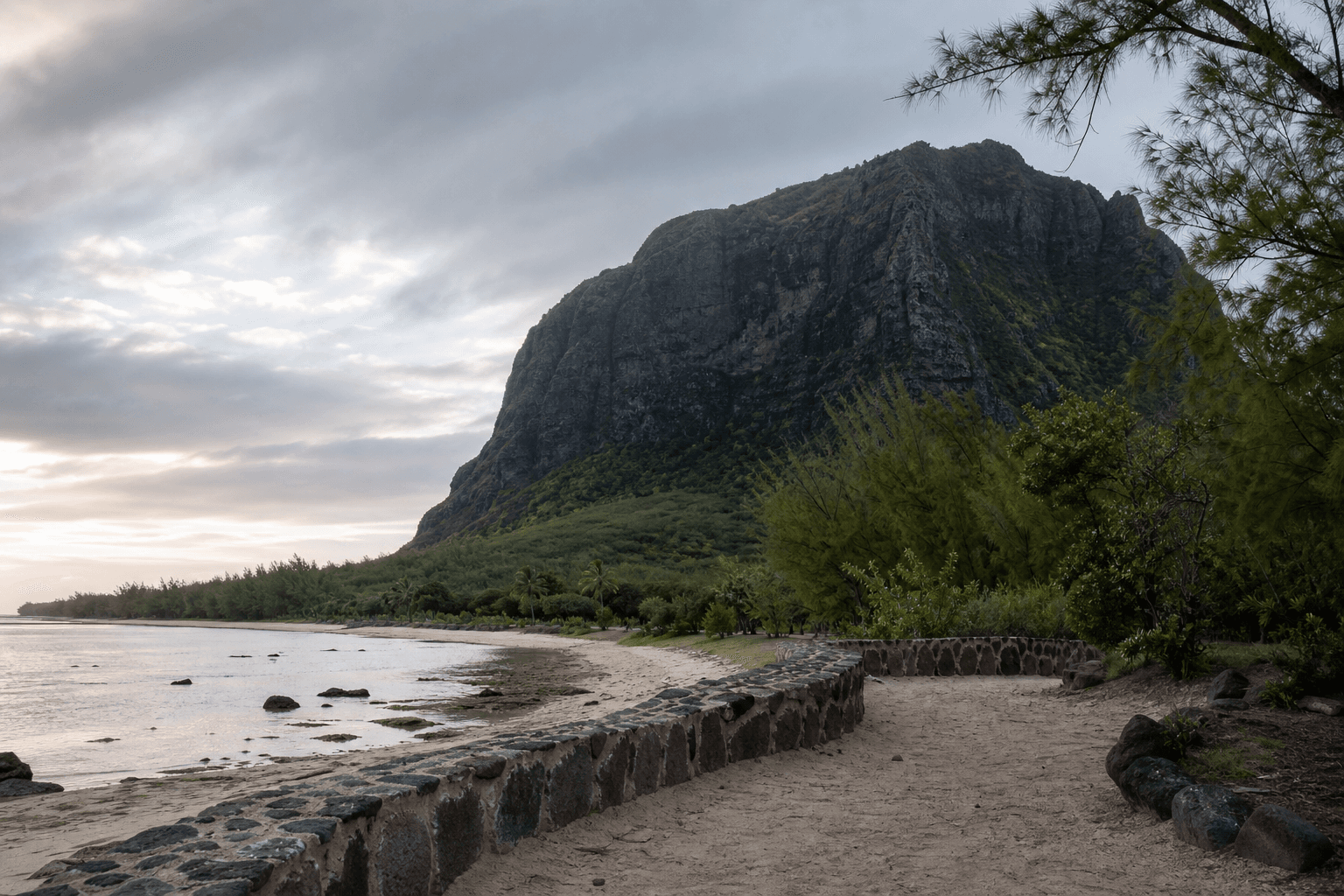
On the grass behind Le Morne public beach, facing the sea at the foot of the mountain, stands the International Slave Route Monument — Mauritius' national memorial to the enslaved people brought to the island and to the maroons who fled to this mountain.
It was inaugurated in 2009 within the UNESCO Slave Route Project, the year after the Le Morne Cultural Landscape itself was inscribed as a World Heritage Site. Monument and mountain are one statement: this landscape is a memorial first.
Reading The Sculptures
The memorial is an ensemble of stone sculptures — a central Mauritian work ringed by pieces contributed by artists from countries connected to the slave trade routes that met here: Africa, Madagascar, India, Europe, and beyond.
The circle of stones from many origins is the point. Mauritius' population descends from these routes, and the monument places that shared origin at the foot of the mountain that sheltered those who resisted.
1 February
Slavery was abolished in Mauritius on 1 February 1835, and every 1 February the monument hosts the national commemoration — ceremonies, music, and gatherings that fill the beach ground beneath the mountain.
If your visit coincides, attend as a respectful guest: it is a national day of memory, locally deeply felt, not a tourist event.
Visiting Well
The monument is free, open, and minutes from the beach towel you were already lying on — which is exactly why it deserves deliberate attention rather than a drive-by photo.
Walk the circle, read the works, look up at the cliffs the maroons climbed, and give the site the quiet you would give any memorial.
Around The Monument
Pair the visit with the wider heritage landscape: the Trou Chenille open-air museum east along the coast, the UNESCO landscape viewpoints, and the history told in this site's maroon legend and UNESCO guides.
Frequently Asked Questions
Where exactly is the Slave Route Monument?
On the open ground behind Le Morne public beach, at the foot of the mountain on the peninsula's west side. It is free to visit and always accessible.
What happens on 1 February?
The national commemoration of the abolition of slavery in Mauritius (1 February 1835), held at the monument with ceremonies and gatherings. Visitors are welcome as respectful guests.
Why is the monument at Le Morne?
Le Morne was a refuge for maroons — escaped enslaved people — and is protected by UNESCO as a cultural landscape of resistance. The monument anchors that national memory at the mountain's foot.
How long does a visit take?
Twenty minutes to walk the ensemble properly — longer if you pair it with Trou Chenille and the heritage guides. It fits naturally into any beach day.
Go deeper into the history
The maroon story is why this landscape is protected. Read it before or after you stand there.